

How Do Termites Communicate? The Secret Language of the Colony
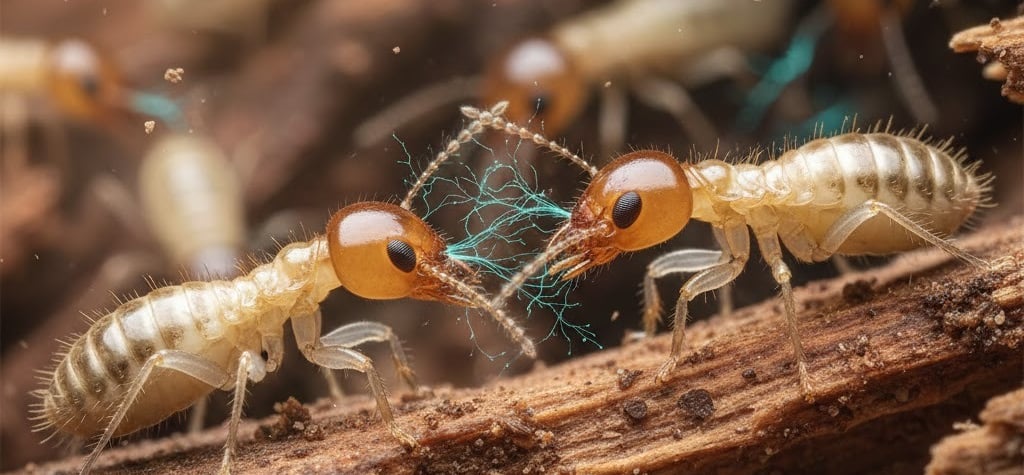
Do you know how termites communicate? Despite living in the dark, these pests are masters of coordination. They use a sophisticated mix of pheromones, vibrations, and physical contact to build massive mounds, find food, and protect the queen. In this guide, the Bio Termite Control Team breaks down the different methods of termite communication and why understanding these behaviors is key to effective termite control.
1/2/20262 min read
1. Chemical Messaging: The Power of Pheromones
Termites primarily "talk" through scent. Within a colony, each caste (workers, soldiers, and the queen) produces a distinct termite pheromone aroma. This chemical signature allows the colony to function as a single, organized unit.
Marking the Trail to Food
Worker termites are constantly on the hunt for cellulose (wood, cardboard, and paper). When a worker finds a food source, it uses its sternal glands to leave a pheromone trail.
The "Follow Me" Sign: As the worker returns to the colony, it leaves a scent trail that acts like a GPS for other termites, leading them directly to your home’s structure.
The Queen’s Command
The Queen uses pheromones to maintain a perfect balance in the colony. She can sense the "scent levels" of each caste. For example, if ants attack and kill off your soldier termites, the queen detects a drop in "soldier scent" and begins producing more soldiers to replenish the ranks.
2. Trophallaxis: Communicating Through Food
Termites use a process called trophallaxis to share nutrients. This involves transferring food and fluids from mouth-to-mouth or anus-to-mouth.
While it sounds unpleasant, it serves two vital SEO-friendly purposes:
Nutrition: It ensures every termite, including those that can't feed themselves, stays fed.
Information Sharing: This fluid exchange distributes the Queen’s chemical messages to the entire population instantly, keeping the colony updated on the nest's needs.
3. Termite Vibrations: The "Head-Banging" Alarm
When a colony is under threat from predators like ants, termites don't just run—they sound the alarm.
Termites have a unique "head-banging" behavior. When they sense danger, they hammer their heads against the colony walls. This creates a vibration that travels through the nest. Other termites feel these vibrations and repeat the movement, spreading the alarm like a wildfire. This vibration is usually paired with an alarm pheromone, signaling the soldiers to rush toward the intruder.
4. Why Termite Communication Matters for Homeowners
Understanding how termites communicate explains why infestations spread so quickly. Once a single scout finds a soft spot in your floorboards, their pheromone trail ensures hundreds of others follow within hours.
Professional Termite Control Tips
If you suspect an infestation, DIY methods often fail because they don't disrupt the colony's communication network. Why hire a professional?
Target the Source: Professionals use baits that termites carry back via trophallaxis, killing the colony from the inside.
Specialized Tools: We use advanced detection tech to find the vibrations you can't hear.
Prevention: We provide long-term barriers to mask the scents that attract new colonies.
Stop the Conversation Before It Starts: If you’re worried about termites in your home, don't wait for the "head-banging" to start. Contact the Bio Termite Control Team today for a professional inspection!
Contact Us
Call, WhatsApp, or Facebook us anytime
Address
Phone
Copyright© 2025. Biotech Termites Control (003798217-A). All rights reserved.
NO D4A, 2ND FLOOR
JALA PRIMA 1,
TAMAN RASA SAYANG,
43200 CHERAS, SELANGOR
Member of Bio Termite Control